N-ビニルピロリドン
- EASTCHEM
- 中国
- 15~20日
- 88-12-0
優れた反応性:ラジカル重合に最適で、高い転化率と安定したバッチ品質を保証します。
優れた溶解性:UV硬化性樹脂の強力な反応性希釈剤として働き、接着性と架橋密度を向上させます。
生体適合性:厳格な国際規格(REACH/ISO)に準拠しており、医療用途に最適です。
親水性の向上:末端ポリマーの濡れ性と保水性を向上させます。
分子式:C6H9NO
A:はい、品質検証の重要性は理解しております。専門の検査機関による評価のために、無料サンプル(最大2kg)をご提供いたします。国際配送費用のみご負担ください。
Q4:貴社のNVP REACHは欧州市場向けに登録されていますか?A:はい、当社のNVPはREACH規則に準拠しており、EUおよび英国へのスムーズな輸入が可能です。また、お客様の現地規制当局への申請を支援するため、SDS(安全データシート)、COA(分析証明書)、TDSなどの文書作成サポートも提供しています。Q5:大量注文の場合、一般的な梱包オプションにはどのようなものがありますか?A:当社の標準パッケージには以下が含まれます。
200kg入り、国連承認プラスチックドラム(20フィートコンテナあたり80ドラム)
| 1000kg IBCタンク | 大規模産業供給向けのISOタンク。海上輸送および陸上輸送中の安全性を確保するため、すべての梱包は強化されています。 | Q6:NVPはUV硬化型コーティング剤の配合をどのように改善するのですか? |
| A:UV硬化型システムにおいて、NVPは反応性希釈剤として作用します。粘度を大幅に低下させ、硬化速度を速め、プラスチックや金属などの難接着性基材へのコーティングの密着性を向上させるとともに、最終塗膜の機械的強度を高めます。 | Colorless to yellowish liquid | Visual Inspection |
| Purity (GC) | ≥ 99.7% (Ultra-high purity) | Gas Chromatography |
| Water Content | ≤ 0.1% | Karl Fischer |
| Color (APHA) | ≤ 10 | Pt-Co Scale |
| Stabilizer | 10-100 ppm (NaOH/NH3/DOP optional) | Customized |
| CAS No. | 88-12-0 | - |
Key Application Fields
(1) UV/Photocurable Resins and Coatings
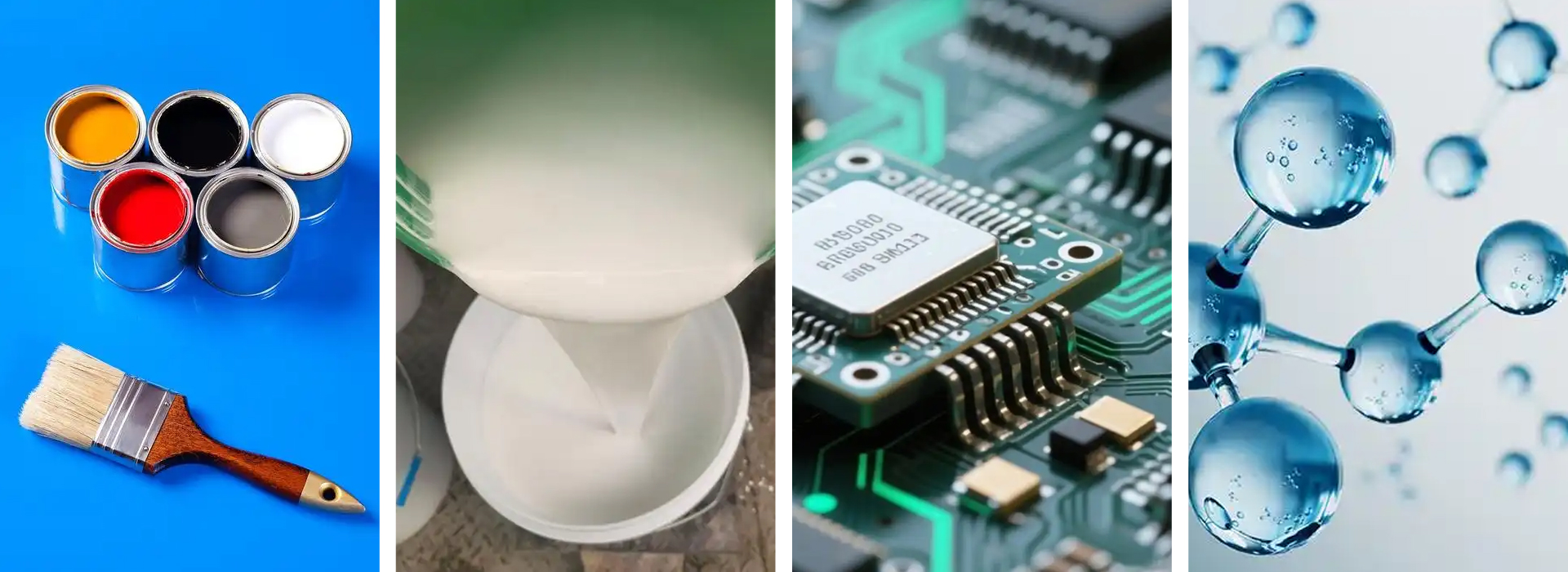
N-Vinylpyrrolidone (NVP) can be used in the formulation design of photocurable systems to optimize film formation, adhesion, chemical resistance, and curing efficiency.
Common applications include: UV coatings, UV varnishes, functional coatings, and printable films.
(2) Adhesives, Thickeners, and Functional Polymers
As a key monomer/functional additive, NVP can help achieve target viscosity adjustment, leveling, and improved post-processing performance, suitable for adhesives and specialized formulation systems.
(3) Membrane Materials, Electronic Materials, and Surface Modification
Through polymer structure design, NVP-related materials can be used to construct functional membranes and surface coatings with specific properties, meeting industrial requirements for water resistance, solvent resistance, and stability.
(4) Pharmaceutical Intermediates and Materials Development (Assessment by Project)
In some R&D and intermediate pathways, NVP is often used as a reactant in polymerization/derivative synthesis processes.
Quality Assurance & Logistics
Global Certifications: ISO 9001:2015 certified manufacturing processes.
Stringent Quality Control: Every batch undergoes GC analysis to ensure 99.7% minimum purity.
Customized Packaging: Available in 200kg plastic drums, IBC tanks, or ISO tanks according to your logistics requirements.
REACH Compliance: Full documentation support for EU and CIS market entry.
Batch Consistency: We provide a COA for each batch, with test results for purity and other key parameters. This gives buyers a clear record of the material supplied and helps them check whether it meets their requirements.
Packaging & Loading Inspection: Before shipment, we check the drum seals, packaging condition, labels, and how the goods are secured for transport. Any visible packaging or loading issues can be addressed before dispatch.
Export Document Preparation: We prepare the commercial invoice, packing list, and other required shipping documents based on the order and destination. We also check the product details, quantities, and package information to keep the documents consistent with the actual shipment.
Quality control and delivery assurance
Strict Incoming & Outgoing Quality Inspection
Each batch undergoes key parameter testing before shipment to ensure stable core quality indicators of NVP.
COA (Certificate of Analysis) is provided for customer warehouse acceptance and process verification.
Traceable Supply Chain
Batch number management and document archiving support customer audits and quality traceability requirements.
Suitable for long-term procurement with stable supply capacity, helping reduce production downtime risks caused by raw material fluctuations.
Fast Response & Technical Support
After receiving your inquiry, we can provide: Product specification confirmation (purity, moisture, color, etc.);Delivery lead time and packaging recommendations.
If required, for mulation or polymerization process adaptation suggestions (based on actual application requirements)
Customer Challenges & Our Solutions
1. Different Results After Changing NVP Suppliers
Customer Challenge:
Changing NVP suppliers can be more complicated than it first appears. A new batch may meet the required purity specification, yet the manufacturer may still need to check how it performs in an existing formulation. For PVP and NVP-based copolymers, differences noticed during laboratory trials can lead to extra testing before the new material is accepted for regular production.
Our Solution:
When you are considering a new NVP source, we can arrange a sample based on your required grade and application. Your technical team can test it using the current formulation and compare the results with those obtained from your existing material. We can also discuss the test feedback with you before moving on to order quantity and delivery details.
2. Finished Products Not Meeting Performance Requirements
Customer Challenge:
Sometimes the problem only becomes clear after the formulation has been tested. A UV-curable coating may not reach the expected curing performance, an adhesive may fall short on adhesion, or the finished material may have a viscosity outside the target range. The manufacturer then has to decide whether the issue comes from the raw materials, the formulation, or the processing conditions. More trials may be needed before the cause becomes clear.
Our Solution:
We first look at the application and the specific performance requirement you need to meet. If NVP is being considered for a coating, adhesive, or specialty polymer, we can provide the relevant product specifications and available technical information for your evaluation. These details help your team assess the material as part of the formulation. The final decision should be based on trial results under your actual production conditions, since NVP alone does not determine the performance of the finished product.
3. Keeping NVP Stable During Storage
Customer Challenge:
Not every batch of NVP is used as soon as it arrives. Some manufacturers need to keep material in storage until the next production run, so the recommended storage conditions cannot be overlooked. If temperature control or stabilizer requirements are not handled properly, premature polymerization may become a concern. The team may then need to check the material before use, potentially delaying a planned batch.
Our Solution:
Storage requirements are worth confirming before the material leaves the supplier. We can provide the applicable SDS and available storage instructions for the specific product supplied. If your team expects to store the material for an extended period, this should be discussed in advance so the relevant requirements can be reviewed. After delivery, follow the product-specific instructions for storage and handling rather than relying on general recommendations for NVP.
4. Getting a New NVP Supplier Approved
Customer Challenge:
A new supplier can look suitable on paper and still take time to pass internal approval. Purchasing may be waiting for technical documents, the quality team may need to compare specifications, and production may require a sample before running its own tests. When these steps cannot be completed together, the first order can be pushed back even if the material itself appears suitable.
Our Solution:
We can provide the available technical documents and arrange samples to support your internal review. Your quality team can check the specifications, while production can assess the material through its own trials. Once you have the evaluation results, we can confirm the practical details for the next order, including quantity, packaging, and shipping arrangements. This keeps the supplier review and order preparation connected without assuming that the material will be approved before your team has finished its checks.
FAQ
Q1: What is the purity level of your N-Vinyl-2-Pyrrolidone (NVP)?
A: We supply high-purity NVP with a minimum assay of 99.7% (measured by Gas Chromatography). For specialized applications like pharmaceutical synthesis or high-end electronics, we ensure ultra-low moisture content (≤0.1%) and stable APHA color values.
Q2: How do you prevent NVP from polymerizing during transportation?
A: NVP is a highly reactive monomer. To ensure stability during transit, we add a stabilizer (typically 10-100 ppm of NaOH or Ammonia). We can also customize the stabilizer type (such as DOP) and concentration based on your specific formulation requirements. We recommend storing the product in a cool, ventilated warehouse away from direct sunlight.
Q3: Do you provide NVP samples for laboratory testing?
A: Yes, we understand the importance of quality verification. We offer free samples (up to 2kg) for professional laboratory evaluation. You only need to cover the international courier cost.
Q4: Is your NVP REACH registered for the European market?
A: Yes, our NVP is REACH compliant, allowing for seamless import into the EU and UK. We also provide full documentation support, including SDS (Safety Data Sheet), COA (Certificate of Analysis), and TDS, to assist with your local regulatory filings.
Q5: What are the typical packaging options for bulk orders?
A: Our standard packaging includes:
200kg UN-approved plastic drums (80 drums per 20' FCL)
1000kg IBC tanks
ISO tanks for large-scale industrial supply. All packaging is reinforced to ensure safety during sea and road freight.
Q6: How does NVP improve UV-curable coating formulations?
A: In UV-curable systems, NVP acts as a reactive diluent. It significantly reduces viscosity, speeds up the curing rate, and enhances the adhesion of the coating to difficult substrates (like plastics and metals) while improving the mechanical strength of the final film.
Q3:検査用のNVPサンプルを提供していますか?